

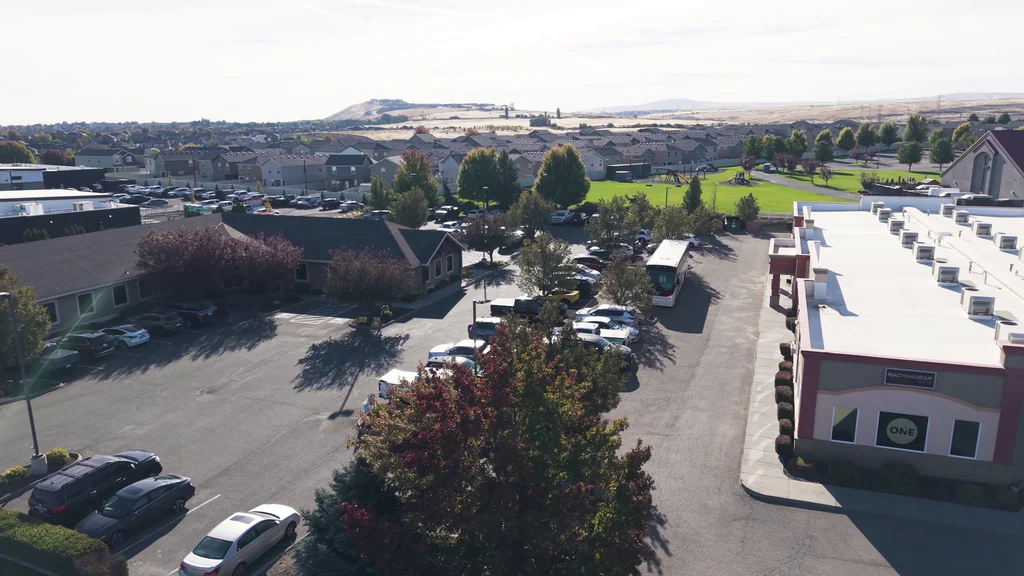
Tri-Cities legislative tour, Oct. 1, 2026 (Contributed Photo)
In early October a bipartisan group of state legislators toured different construction sites around the Tri-Cities — an event organized by homebuilder and business organizations and pitched as an opportunity to see how state regulations affect the price and placement of new home construction.
Lt. Gov. Denny Heck, who has made Washington’s shortage of affordable housing a focus of his time in office, was among the elected officials who took the tour.
“The reality is homes cost way more than they once did,” Heck said this week in an interview on The Impact. “They’re up 50% just since Covid — 50% in just that short period of time.Then when you add to that, the higher interest cost debt service to pay for a mortgage, then you’re really pricing a lot of people out.”
Based on projected population growth, the state anticipates Washington will need more than 1 million additional homes by 2044.
The state Legislature has tried to attack that problem from different angles. Bills that passed in recent years made sweeping changes to zoning laws, reduced parking space requirements for new homes, and pushed local governments to speed up permit timelines.
But homebuilders argue other regulations like energy codes and land-use restrictions, continue to drive up the cost of residential constructing.
A 2025 report from the Building Industry Association of Washington states that the cost of land has surged in the last 10 years and doubled in some urban counties. The organization argues that local governments have been too restrictive when drawing boundaries under the state’s Growth Management Act and links land-use restrictions to added costs for housing developers and ultimately homebuyers.
The organization Futurewise, which advocates for sustainable land use policies, defends the Growth Management Act as an important planning tool.
“There’s peer-reviewed studies, for example, that show that having a compact urban growth area reduces public facilities and services costs significantly,” said Tim Trohimovich, Futurewise director of planning and law.
Heck acknowledges that environmental rules, safety regulations, and growth restrictions do make affordable housing development more challenging, but argues that they also reflect important societal goals: “As a society, we have a lot of values in conflict.”
He points to higher interest rates and tariffs on building materials and as other notable contributors to the growth in home construction costs.
“We’re now 35 years into this — that there are fewer buildable lands inside the urban growth boundary,” Heck said of the impact of the Growth Management Act. “Yet we continue to have a lot of demand and a lot of pressure to provide additional housing. We know there’s a shortage, so we’re kind of in a vise, can’t build outside and can’t build sufficiently inside.”