

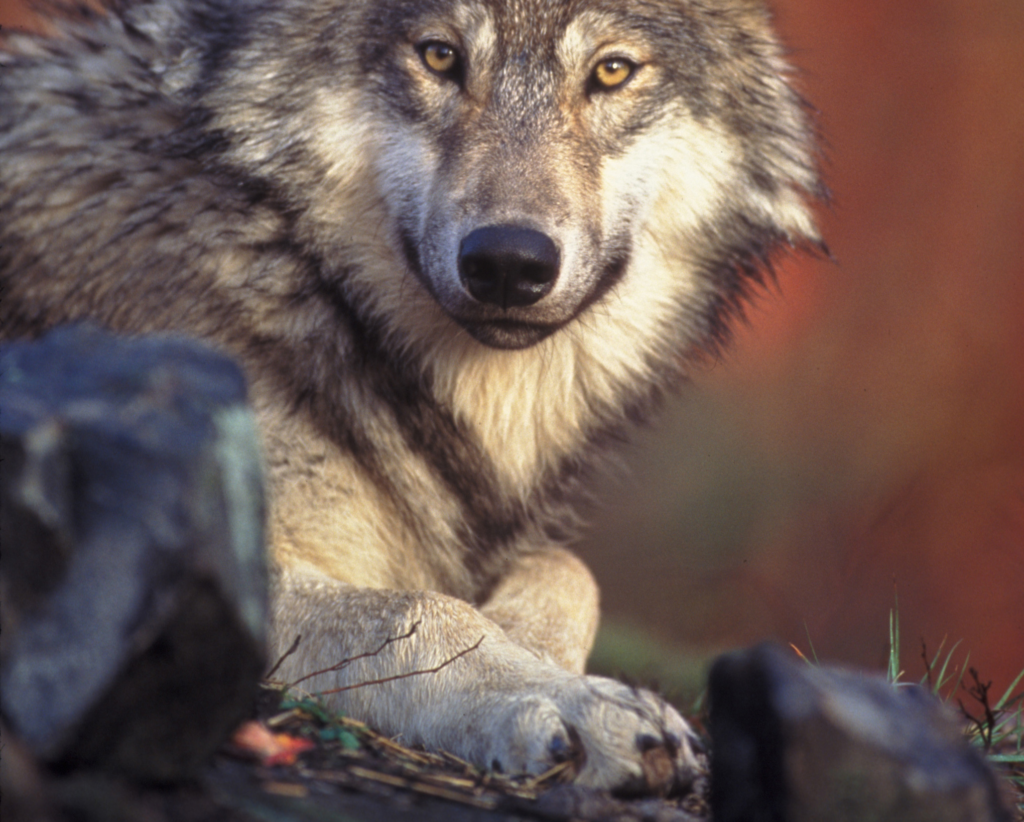
A gray wolf photographed by the US Fish and Wildlife Service Pacific Region. Credit: Gary Kramer/USFWS.
Gray wolves are gaining numbers in Washington, continuing a trend that began nearly 20 years ago.
The newest official gray wolf population lists at least 270 wolves in 49 packs based on surveys from state and tribal wildlife managers.
In 2008, biologists identified the first confirmed resident pack in Washington since the 1930s. Other than a decline in 2024, the wolf population has consistently grown from one year to the next.
There are clusters of wolves from the North Cascades in north-central Washington to the Kettle River Range in Eastern Washington near Idaho. Wolves have another stronghold in the southeastern corner of the state that borders Oregon.
State wildlife officials say there are currently no packs living in two other state-designated wolf recovery zones: the South Cascades recovery region or the Northwest Coast region on the Olympic Peninsula.
Washington State Department of Fish and Wildlife wolf biologist Trent Roussin told The Impact, that they see collared wolves “get right down to Ellensburg Valley, right along Interstate 90, and then they seem to turn around. We know just from looking at where these wolves are turning around, they’re often running into fences.”
Fences may be slowing their dispersion, but Roussin predicts the highly territorial predators will find their way further south as they run out of space in the north, noting the size of the average pack territory in Washington is around 250 square miles.
“As the population expands, they just have to expand outward, so we do expect them to start occupying new areas south of I 90,” he said.
The Tenino-based sanctuary Wolf Haven International is launching a public awareness campaign geared towards minimizing future wolf conflicts in the southwest sector of the state.
“We need to do what we can to protect communities and support a healthy distinction in the wolves’ minds between areas they should be and areas they should not be,”said executive director Geoff Willard. “But there are pockets where they can live and thrive and have minimal impact on human development and communities. I think the challenge in front of us here in Washington is to find those pockets, help the wolves find those pockets.”
Unlike coyotes, Roussin says that gray wolves are not likely to enter densely populated areas, but they may frequent the outskirts of towns. “That is where we see most human-wolf interactions, kind of in that slightly rural landscape where people are living on larger acreages,” he added.
Apart from their significant size differences, Roussin notes that coyotes tend to sprint away from people when they know they’ve been seen, but wolves often stare right back. “It can be a little disconcerting for folks, but it’s not really threatening. They’re just trying to figure out what you are.”