

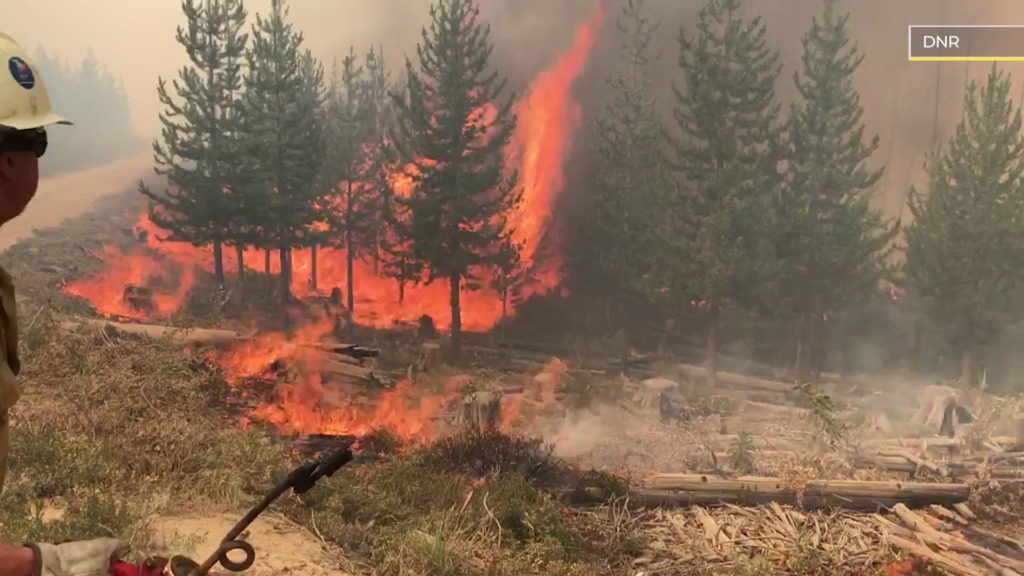
A firefighter holding a torch surveys the movement of flames during a preemptive burn operation. Courtesy: WA DNR
Tucked into last year’s budget cuts was approximately $60 million meant for wildfire mitigation and community hardening tied to a long-term strategy shift approved by lawmakers several years ago.
The 2021 legislation committed the state to ultimately spend $500 million over eight years to boost wildfire response, community resilience, and forest health.
The commissioner of public lands and a coalition of other stakeholders urged lawmakers to restore the funding and in the 2026 session lawmakers delivered.
“These dollars have demonstrated impact every year, and we really have changed the path we’re on for facing these wildfire, forest health crises,” said Skippy Shaw, Washington state government relations director for The Nature Conservancy.
In addition to boosting DNR’s wildfire response capabilities, some of the state funding went towards community vegetation clearing projects and conducting proactive burns, in places like Okanogan County, in fire prone north central Washington.
The executive director of the Confederated Tribes of the Colville Reservation, Cody Desautel, told “The Impact” that DNR staff recently completed treatment work south of the tribal government center and that work is underway to prepare the area to the north around Nespelem.
“We’re expecting a bad fire season. It’s really important to get that work done ahead of time,” he said.
To the west of the Cascades, conservation advocate Glenn Ellis Jr., a former member of the Makah Tribal Council, is focused on avoiding a worst case scenario fire in the vast forests of the Olympic Peninsula. Ellis says he’s seen the aftermath of big fires on the eastern side of the state and the different outcomes for treated and untreated areas.
“Indigenous folks had a history of doing controlled burns to make sure that the forests were in a state that if there was a fire, it wouldn’t burn out of control and I think that’s the most important aspect that’s changed in recent years,” said Ellis. “We’re hoping that we can get ahead of the ball and do the same thing that they’ve done on this side of the state.”